Waterfalls are among the most rewarding destinations on Australian walks, and some of the most popular. They're also places where slips, falls and water accidents happen. NSW National Parks highlights staying safe around waterfalls as part of its bushwalking safety advice. This guide covers the main hazards and how to enjoy falls safely.
This guide is general information written in our own words, based on the official sources listed at the end. Track conditions, closures, fire danger and safety advice change, and rules differ between parks and states, so always check current park alerts and the managing agency's advice before you go. It is not a substitute for first aid training or local knowledge. In an emergency, call Triple Zero (000).
The main hazards
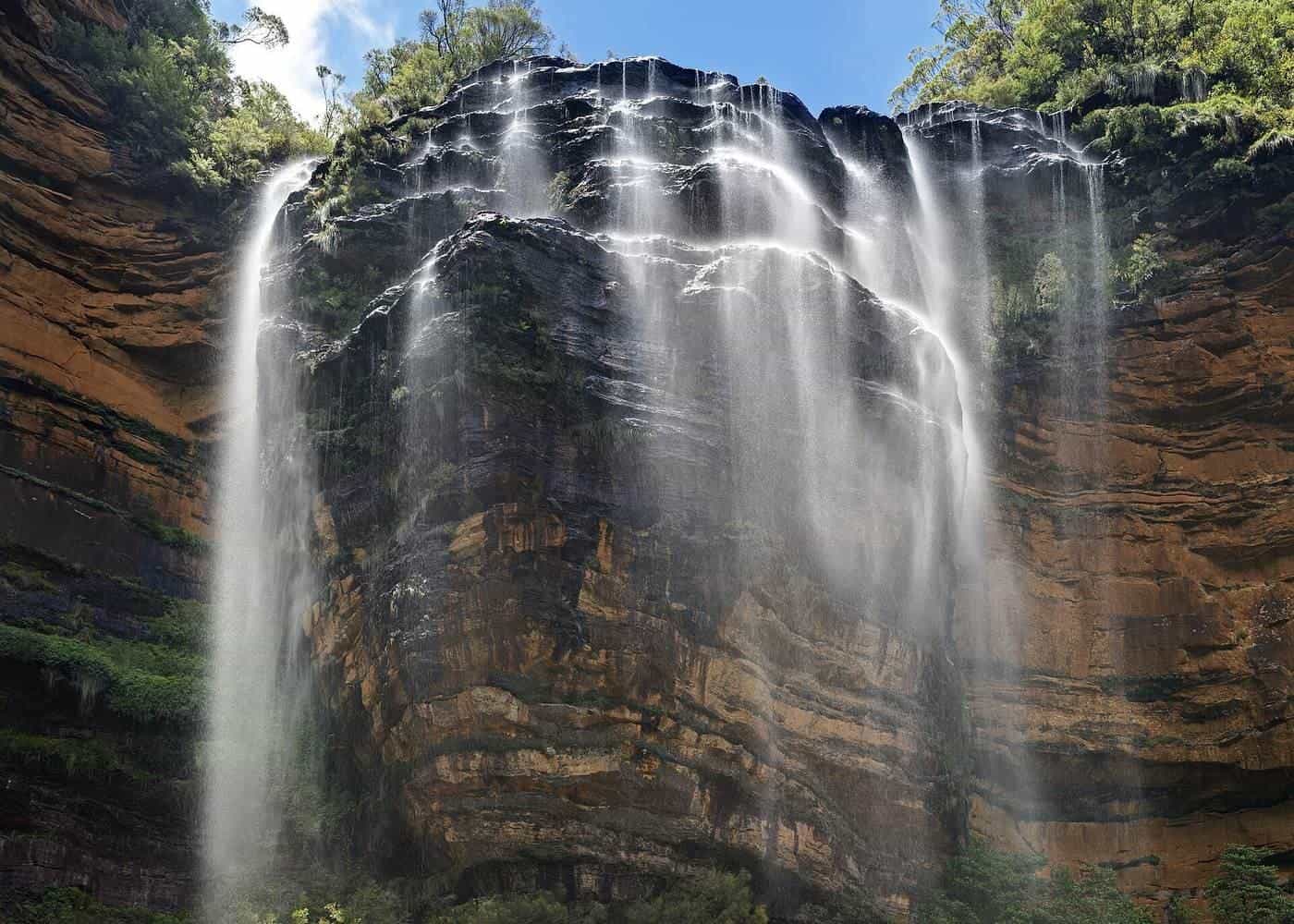
- Slippery surfaces: rocks near falls are often wet, covered in algae or moss, and very slippery, even in dry weather.
- Cliff edges: the tops of falls are often at cliff edges, and not all are fenced.
- Deep, cold water: pools can be deeper and colder than they look, and may hide submerged rocks and logs.
- Moving water: currents near falls and in creeks can be strong.
- Rising water: creeks can rise quickly after rain, sometimes from rain that fell upstream.
Stay on tracks and behind barriers
Lookouts and fenced viewing areas are there for a reason. Stay on formed tracks and behind barriers, and don't climb on rocks at the top or edge of falls for photos. Keep children within reach, and take extra care with wet, worn steps.
Swimming holes
Swimming at waterfalls can be a highlight of a hot day, but it needs care:
- Only swim where swimming is allowed and signage doesn't warn against it.
- Never jump or dive. Depths change and hidden rocks and logs cause serious injuries.
- Enter slowly, feet first, and check the depth.
- Cold water can affect your breathing and strength, even on hot days.
- Don't swim alone, and keep children supervised and within reach.
- Stay out of water near the base of falls, where currents can be strong.
After rain and storms
Rain makes waterfalls spectacular, but it also makes them more dangerous. Rocks get slipperier and creeks can rise fast. Don't cross flooded creeks, and if water is rising, move to higher ground. Check park alerts, as tracks may be closed after storms. NSW National Parks warns that weather conditions can change rapidly.
The climb back out
Many waterfall walks start at the top of an escarpment and descend into a gorge. That means the hardest part, the climb back up, comes at the end. Check the number of steps and elevation, carry enough water, and allow time to climb out comfortably before dark. Our choosing a walk guide explains how grades reflect this.
Footwear
Shoes with good grip make a big difference on wet rock. Don't wear thongs, which NSW National Parks advises against on bushwalks. See our footwear and clothing guide.
Photography
Many falls accidents involve people stepping off tracks for photos. Take your photos from tracks and lookouts, keep an eye on your footing, and never back towards an edge while framing a shot.
Protecting waterfalls
Waterfall areas are often fragile, with ferns, mosses and rare plants growing in the spray zone. Stay on tracks, don't use soap or sunscreen-heavy swimming in small pools, and carry out all your rubbish. See our Leave No Trace guide.
Visiting with children
Waterfalls fascinate children, which is part of their appeal and part of the risk. Agree before you arrive that everyone stays on the track and behind barriers, and keep young children within reach around lookouts, steps and pools. Choose falls with fenced viewing areas and short, well-made tracks for younger children. Our hiking with kids guide has more tips.
When falls are at their best
Many falls flow best after rain and can slow to a trickle in long dry spells. The safest time to visit is often a day or two after rain has cleared, when flows are still good but creeks have dropped. Check park alerts, as tracks to falls are sometimes closed for damage or maintenance.
A simple pre-walk check
Before a waterfall walk, check the forecast and any recent heavy rain, park alerts and track closures, and the number of steps and elevation on the route. Wear shoes with good grip, carry water for the climb out, and tell someone your plans. If creeks are high, choose another walk.
Use our pack list
Our free pack list builds a checklist from the type of walk and the conditions you choose, such as hot weather, cold or alpine areas, remote walks without phone coverage and walking with children. It is based on NSW National Parks' bushwalking safety advice, runs entirely in your browser, and nothing you choose is sent anywhere.
Where our information comes from
Factual statements in our guides are based on official and expert sources, including NSW National Parks and Wildlife Service, the Australian Maritime Safety Authority, healthdirect, the Australian and New Zealand Committee on Resuscitation, St John Ambulance, the Australian Fire Danger Rating System, the NSW Rural Fire Service, the Bureau of Meteorology, Leave No Trace Australia and Parks and Wildlife Service Tasmania. We link to each source at the end of the page and write everything in our own words.
Conditions change
Tracks close for fire, flood, storm damage, maintenance and pest control, and conditions can change quickly. Safety advice and park rules are also updated from time to time, and they differ between states and parks. Treat our guides as a starting point, and always check current park alerts, the weather forecast and the fire danger rating with the managing agency before you go.
Other states and territories
Our examples often draw on NSW National Parks advice, because it is detailed and clearly written, but every state and territory has its own parks agency, rules and safety information. Before walking in another state, check that agency's website for park alerts, bookings, fire and camping rules, and any trip registration options.
Learn first aid and navigation
Two skills make the biggest difference for regular walkers: first aid and navigation. A recognised first aid course teaches you how to manage injuries, snakebite and medical emergencies until help arrives. Navigation skills, including reading a topographic map and using a compass, help you stay on route when signs are missing or your phone fails. Walking clubs often run navigation training.
Walking clubs
Bushwalking clubs are a great way to build experience. Club walks are usually graded, led by experienced members and planned with safety in mind, and many clubs run training in navigation, first aid and multi-day walking. They are also a good way to discover new walks and meet people who share your interest.
A quick checklist
If you remember only a few things from our guides, make them these: choose a walk that suits the slowest person; check the weather, park alerts and fire danger; carry water, food, layers, a map, a torch and a first aid kit; tell someone your plans; carry a PLB for remote walks; and turn back when conditions change. In an emergency, call Triple Zero (000).
Respect Country
Every walk in Australia is on the Country of Aboriginal and Torres Strait Islander peoples, many of whom continue to care for these places. Learn about the Traditional Owners of the areas you visit, respect any requests about culturally significant sites, and leave cultural places undisturbed.
Corrections and feedback
We review our guides against their sources and show the date each page was last checked. If you notice something out of date or incorrect, please tell us through our contact page. We read every message and correct mistakes promptly.
Key points
- Rocks near falls are often very slippery; wear shoes with good grip.
- Stay on tracks and behind barriers at the top of falls.
- Never jump or dive into waterfall pools.
- Stay out of the water and don't cross creeks after heavy rain.
- Allow time and water for the climb back out.
Frequently asked questions
Why are waterfalls dangerous?
Rocks around falls are often wet, mossy and slippery, cliff edges may be unfenced, and pools can be deep, cold and hide submerged rocks.
Is it safe to swim at waterfalls?
Only where swimming is allowed and conditions are safe. Never jump or dive, and check depth and hazards first.
What about after heavy rain?
Creeks can rise quickly after rain. Stay out of the water, and don't cross flooded creeks.
Are waterfall walks steep?
Often. Many involve steps down into gorges, which means a steep climb back out.
Sources and further reading
Facts on this page were checked against these primary and official sources. Conditions change — confirm before you travel or buy.
- Bushwalking safety — NSW National Parks and Wildlife Service
- Think Before You TREK — NSW National Parks and Wildlife Service
- Australian Walking Track Grading System — NSW National Parks and Wildlife Service