Summer is a popular time to walk, but heat and bushfire risk are two of the most serious hazards Australian walkers face. A hot, dry, windy day can make even a familiar walk dangerous. This guide explains the national fire danger ratings, what they mean for walkers, and how to plan for hot weather.
This guide is general information written in our own words, based on the official sources listed at the end. Track conditions, closures, fire danger and safety advice change, and rules differ between parks and states, so always check current park alerts and the managing agency's advice before you go. It is not a substitute for first aid training or local knowledge. In an emergency, call Triple Zero (000).
The Australian Fire Danger Rating System
Since 2022, Australia has used a national fire danger rating system. It has four levels, each with an action, plus "No Rating" on days of minimal risk:
- Moderate: plan and prepare. Most fires can be controlled. Stay up to date and be ready to act.
- High: be ready to act. There's a heightened risk. Be alert for fires and decide what you'll do if one starts. The NSW Rural Fire Service says the safest option, if a fire starts, is to avoid bushfire risk areas.
- Extreme: take action now to protect life and property. Fires will spread quickly and be extremely dangerous. Fire agencies advise reconsidering travel through bushfire risk areas.
- Catastrophic: for your survival, leave bushfire risk areas. If a fire starts and takes hold, lives are likely to be lost.
The Bureau of Meteorology explains that state and territory fire agencies set fire danger ratings, based on weather and other conditions, including temperature, humidity, wind, rain and fuel conditions.
What the ratings mean for a bushwalk
National parks and bushland are, by definition, bushfire risk areas. In our view, a sensible approach for walkers is:
- Moderate: check conditions and alerts and carry a way to receive warnings.
- High: choose shorter walks with several exits, close to help, and know what you'll do if you see smoke.
- Extreme: reconsider walking in the bush at all, as fire agencies advise reconsidering travel through risk areas.
- Catastrophic: don't go bushwalking in bushfire risk areas. Fire agencies say to leave these areas, ideally the night before or early in the morning.
Parks may also close on high-risk days, and total fire bans restrict the use of fire, including some camp stoves. Check park alerts and your state fire agency before you go.
Checking before you go
On the day, and the day before, check:
- The fire danger rating for the district you're walking in.
- Park alerts and closures on the managing agency's website or app.
- Any total fire bans.
- Current incidents through your state fire agency's warnings.
- The weather forecast, including wind changes.
If you see smoke or fire
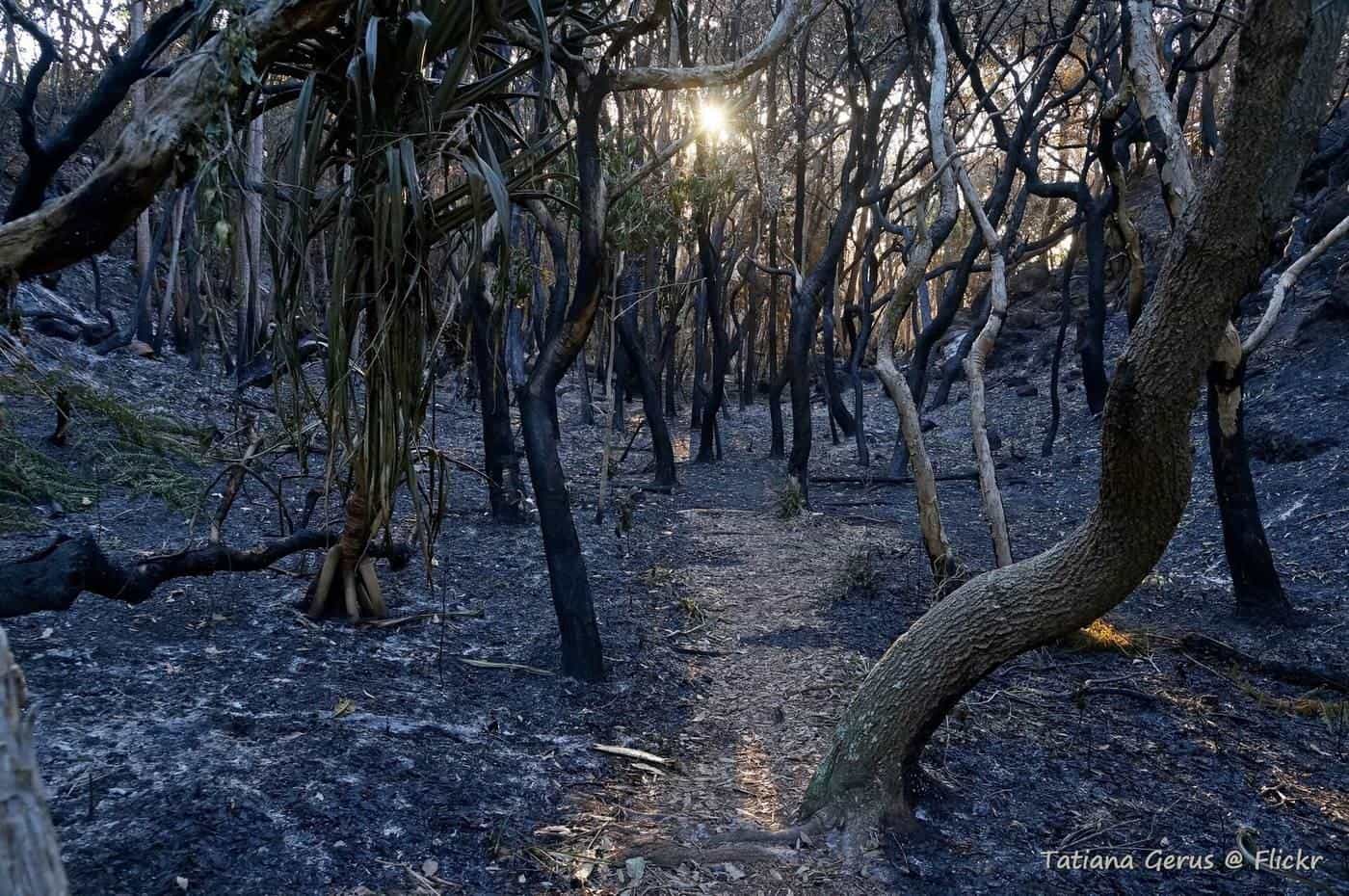
Turn back the way you came if it's safe, move away from the fire and toward cleared or already burnt ground if possible, and call 000. Follow advice from emergency services. Don't try to outrun a fire uphill. This is a strong reason not to be in the bush on high-risk days.
Walking in the heat
Heat can be dangerous on its own, especially on exposed tracks, steep climbs and in humid conditions. To reduce the risk:
- Choose shady, shorter walks, and avoid exposed tracks on hot days.
- Start at first light and finish before the hottest part of the day.
- Carry much more water than the 2 litres per person NSW National Parks lists as a minimum, and drink regularly.
- Wear a broad-brimmed hat and light, loose clothing.
- Rest in the shade, and turn back early if anyone feels unwell.
Recognising heat illness
Feeling unusually tired, dizzy, nauseous, with a headache or cramps can be signs of heat illness. Stop, rest in the shade, cool down and drink water. Confusion, collapse or hot, dry skin are signs of a medical emergency: call 000.
Smoke and air quality
Bushfire smoke can travel a long way. If smoke is heavy, consider walking another day, particularly if you have asthma or heart or lung conditions.
Plan cool-season walks
Many of Australia's best walks are at their finest in autumn, winter and spring. Save exposed, hot walks for cooler months, and use summer for short, shady walks early in the day.
Use our pack list
Our free pack list builds a checklist from the type of walk and the conditions you choose, such as hot weather, cold or alpine areas, remote walks without phone coverage and walking with children. It is based on NSW National Parks' bushwalking safety advice, runs entirely in your browser, and nothing you choose is sent anywhere.
Where our information comes from
Factual statements in our guides are based on official and expert sources, including NSW National Parks and Wildlife Service, the Australian Maritime Safety Authority, healthdirect, the Australian and New Zealand Committee on Resuscitation, St John Ambulance, the Australian Fire Danger Rating System, the NSW Rural Fire Service, the Bureau of Meteorology, Leave No Trace Australia and Parks and Wildlife Service Tasmania. We link to each source at the end of the page and write everything in our own words.
Conditions change
Tracks close for fire, flood, storm damage, maintenance and pest control, and conditions can change quickly. Safety advice and park rules are also updated from time to time, and they differ between states and parks. Treat our guides as a starting point, and always check current park alerts, the weather forecast and the fire danger rating with the managing agency before you go.
Other states and territories
Our examples often draw on NSW National Parks advice, because it is detailed and clearly written, but every state and territory has its own parks agency, rules and safety information. Before walking in another state, check that agency's website for park alerts, bookings, fire and camping rules, and any trip registration options.
Learn first aid and navigation
Two skills make the biggest difference for regular walkers: first aid and navigation. A recognised first aid course teaches you how to manage injuries, snakebite and medical emergencies until help arrives. Navigation skills, including reading a topographic map and using a compass, help you stay on route when signs are missing or your phone fails. Walking clubs often run navigation training.
Walking clubs
Bushwalking clubs are a great way to build experience. Club walks are usually graded, led by experienced members and planned with safety in mind, and many clubs run training in navigation, first aid and multi-day walking. They are also a good way to discover new walks and meet people who share your interest.
A quick checklist
If you remember only a few things from our guides, make them these: choose a walk that suits the slowest person; check the weather, park alerts and fire danger; carry water, food, layers, a map, a torch and a first aid kit; tell someone your plans; carry a PLB for remote walks; and turn back when conditions change. In an emergency, call Triple Zero (000).
Respect Country
Every walk in Australia is on the Country of Aboriginal and Torres Strait Islander peoples, many of whom continue to care for these places. Learn about the Traditional Owners of the areas you visit, respect any requests about culturally significant sites, and leave cultural places undisturbed.
Corrections and feedback
We review our guides against their sources and show the date each page was last checked. If you notice something out of date or incorrect, please tell us through our contact page. We read every message and correct mistakes promptly.
Key points
- Fire danger ratings: Moderate, High, Extreme and Catastrophic, plus No Rating.
- Reconsider bushwalking on Extreme days, and stay out of the bush on Catastrophic days.
- Check ratings, park alerts, fire bans and the forecast before you go.
- In heat, start early, choose shade and carry much more water.
- Call 000 for signs of serious heat illness.
Frequently asked questions
What are the fire danger ratings?
The Australian Fire Danger Rating System has four levels: Moderate, High, Extreme and Catastrophic, plus No Rating on low-risk days.
Should I go bushwalking on an Extreme day?
Fire agencies advise reconsidering travel through bushfire risk areas on Extreme days. Many walkers choose a different activity.
What does Catastrophic mean for walkers?
For your survival, leave bushfire risk areas. Don't go bushwalking in fire risk areas on Catastrophic days.
Who sets fire danger ratings?
State and territory fire agencies, based on weather and other conditions, as the Bureau of Meteorology explains.
Sources and further reading
Facts on this page were checked against these primary and official sources. Conditions change — confirm before you travel or buy.
- Australian Fire Danger Rating System — Australian Fire Danger Rating System
- Fire danger ratings — NSW Rural Fire Service
- Fire weather services — Bureau of Meteorology
- Bushwalking safety — NSW National Parks and Wildlife Service